
The Landis gardens have been filled with blooms all year, thanks to some quality compost, good soaking rains, and a little Milorganite ®, an organic fertilizer with a distinct odor that deters deer. It’s been years since we’ve seen the phlox and daylily flowers go from bud to blossom without being eaten by wildlife in our Van Loveland Garden.
In any garden, as some plants flourish, others decline, and sometimes Nature does the planting. Gardeners call these plants “volunteers.”
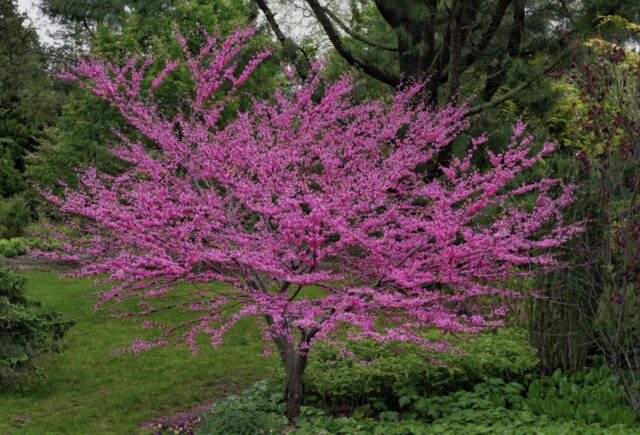
One such willing volunteer is Eastern redbud (Cercis canadensis), which has randomly shown up throughout the gardens over the past few years. When these volunteers first appeared, we dug and potted up the seedlings for a plant sale. Since then, however, I’ve counted over a dozen good sized specimens which are starting to get a little too comfortable in their random locations. Two have begun to frame one of the stone pathways, and I wonder if perhaps they should stay where they are, after all.
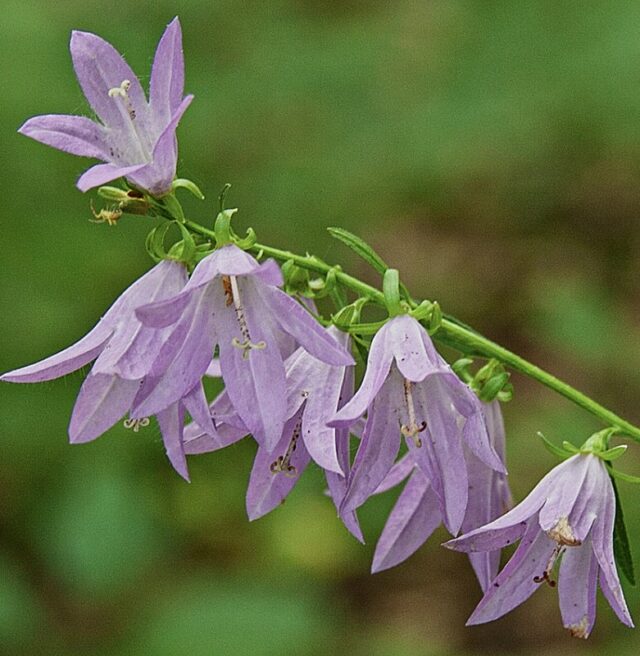
Another abundant garden volunteer this season has been the purple bellflower (Campanula rapunculoides), an invasive pretty plant that does get eaten by wildlife. Common mullein (Verbascum), and lamb’s ear (Stachys byzantina) have also popped up to spread here and there, but the bees aren’t complaining about that.
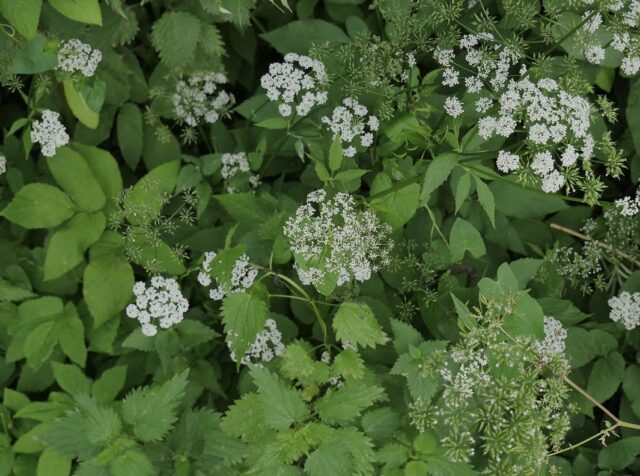
Native common milkweed (Asclepias syriaca) definitely enjoys our fertile garden beds, but nothing has become a nuisance as much as the spreading bishop’s weed (Aegopodium podagraria), the bane of many gardeners. This plant will take more than our furry friends to control. A member of the carrot family (Apiaceae), bishop’s weed was introduced to North America for its ornamental and medicinal values -- and resilient nature. The plant is edible and has been compared to parsley and spinach when boiled. It has traditionally been used to treat gout and joint pain. Bishop’s weed is considered a highly invasive exotic weed, as it can easily grow in heavy shade where grass will not, eventually spreading and outcompeting native plants. Though pollinators do favor the lacey flowers that bloom in June, most gardeners (including me) who constantly try “weeding” it are not able to dig out the full rhizotomous stems which spread aggressively underground. At my own home I’ve mowed and string trimmed it, hoping something else will take its place, but to no avail. We have had some luck by smothering it iwith cardboard in the Landis gardens, though hand weeding has still been our best option for control. It may not be one of our favorite volunteers, but it sure is determined!
Our director is fond of saying that volunteers are the lifeblood of the Arboretum. Of course, that’s most true of our human volunteers. But let’s also thank Nature for providing us with plant volunteers too! All are welcome. Well, maybe not bishop’s weed.